Forty-Eight Hours to Tender: The Long Marinating Secrets Behind Ataşehir's Most Legendary Kebabs
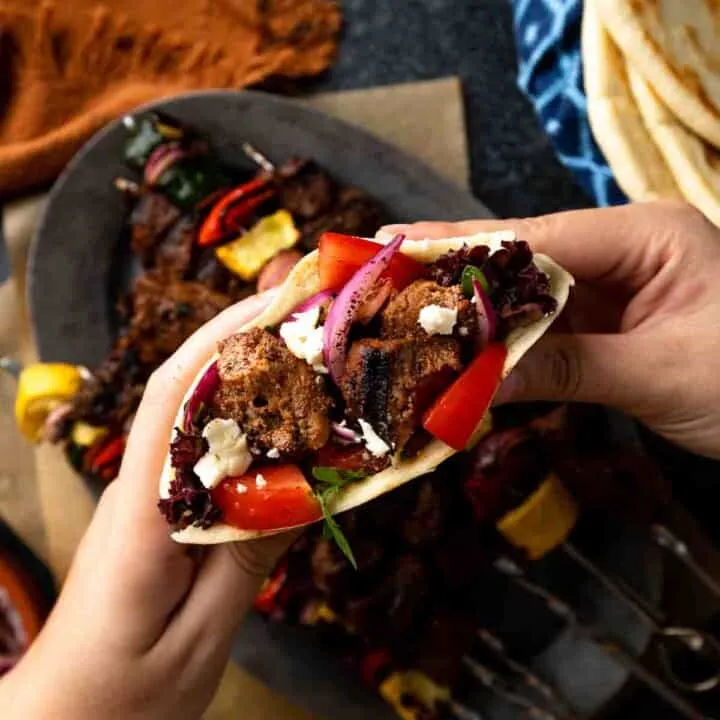
Photo: raw marinated lamb kebab skewers in bowl Turkish kitchen preparation, via thesageapron.com
There's a grill master in Ataşehir — I'll call him Hasan Usta because that's what everyone calls him — who hasn't started a kebab on the day of serving in over twenty years. Not once. If you show up at his small restaurant on a Friday night and order his signature kuzu şiş, you're eating lamb that entered a marinade on Wednesday afternoon.
When I asked him why, he looked at me the way a carpenter looks at someone who just asked why measurements matter.
"The fire takes maybe ten minutes," he said. "The flavor takes two days."
This is the essential philosophy behind Ataşehir's most celebrated kebab tradition, and it's one that gets almost no attention in Western food media. We talk endlessly about the technique of grilling — the heat, the char, the cut of meat. What we skip over is the long, patient, transformative work that happens in a ceramic bowl in a walk-in refrigerator, long before anyone reaches for a skewer.
Why Time Does What Seasoning Can't
To understand why extended marinating matters, it helps to think about what a marinade is actually doing at the molecular level. This isn't just flavor sitting on the surface of a piece of meat. Given enough time, acidic components — yogurt, pomegranate molasses, lemon juice — begin to denature surface proteins, gently loosening the muscle fibers and creating pathways for fat-soluble aromatics to travel deeper into the meat.
A thirty-minute marinade seasons the outside. A forty-eight-hour marinade seasons the inside.
The difference on the plate is not subtle. Meat that's been properly long-marinated in the Ataşehir tradition has a particular quality that's hard to describe until you've experienced it: it's tender without being mushy, intensely flavored without tasting like it was soaked in anything, and it chars beautifully on the grill because the surface sugars from ingredients like onion juice and pomegranate have had time to penetrate and redistribute.
The Forgotten Technique: Onion Juice
Ask any veteran kebab cook in Ataşehir what the single most important marinade ingredient is, and a striking number of them will say the same thing: onion juice. Not onion. Not onion powder. The raw, freshly pressed liquid from grated onion.
This is a technique that predates refrigeration, predates modern food science, and possibly predates the Ottoman Empire itself. Onion juice contains enzymes — particularly proteases — that actively break down muscle proteins. Combined with the extended time of a two-day marinade, the effect is dramatic.
The method is straightforward: grate a large white or yellow onion on the fine side of a box grater over a bowl, then squeeze the pulp through cheesecloth or a clean kitchen towel to extract only the juice. Discard the solids. This liquid becomes the base of the marinade.
One tablespoon of fresh onion juice per pound of meat is the ratio that came up most consistently across the grill masters I spoke with in Ataşehir.
The 48-Hour Kuzu Şiş Marinade
This is a composite recipe drawn from multiple sources in Ataşehir, representing the broad tradition rather than any single restaurant's proprietary blend. It works beautifully on lamb shoulder or leg, cut into roughly two-inch cubes.
For 2 pounds of lamb:
- 3 tablespoons fresh onion juice (from approximately 1 large onion)
- ½ cup whole-milk yogurt (full-fat, not Greek-style)
- 2 tablespoons olive oil
- 1 tablespoon pomegranate molasses
- 1 teaspoon ground cumin
- 1 teaspoon sweet paprika
- ½ teaspoon pul biber (Turkish red pepper flakes — Aleppo pepper works as a substitute in the US)
- ½ teaspoon black pepper
- 1 teaspoon kosher salt
- 4 garlic cloves, minced to a paste
Combine everything in a non-reactive bowl — glass or ceramic, not metal. Add the lamb and toss thoroughly until every surface is coated. Cover tightly with plastic wrap, pressing it directly onto the surface of the meat to minimize air exposure. Refrigerate for a minimum of 24 hours, ideally 48.
When you're ready to grill, pull the meat out of the refrigerator one hour before cooking and let it come toward room temperature. Thread onto skewers, shake off excess marinade, and grill over high heat. The residual sugars will char quickly — that's intentional. Don't fight it.
The Science of Patience
Here's where things get interesting for American cooks raised on the "marinate overnight" school of thought: there's a meaningful difference between twelve hours and forty-eight hours, and it's not just about intensity of flavor.
In the first twelve hours, you're primarily achieving surface seasoning and beginning the tenderization process. Between twelve and twenty-four hours, the enzymatic activity from the onion juice and the acid from the yogurt is doing its deepest work — breaking down connective tissue, redistributing fat, creating that characteristic yielding texture. By hour forty-eight, the marinade has essentially become part of the meat rather than a coating on top of it.
Go beyond sixty hours, though, and the acid starts working against you. The texture can turn mealy, almost pasty, as the protein breakdown overshoots. Forty-eight hours is the sweet spot that Ataşehir's grill masters have landed on through generations of trial and error, long before anyone had the vocabulary of food science to explain why.
Why Rushing Always Shows
Hasan Usta told me a story about a competitor who once tried to replicate his kebab using a one-hour marinade and a meat tenderizer mallet to compensate for the missing time. "You could tell," he said, shaking his head slowly. "The flavor was on the outside only. Inside, it was just meat. Good meat, maybe, but just meat."
This is the core problem with shortcuts in the long-marinade tradition. Time isn't just an ingredient — it's a process. No amount of extra seasoning or mechanical intervention replicates what happens when proteins and enzymes and aromatics interact slowly over two days. The mallet tenderizes through force. The marinade tenderizes through chemistry. They produce fundamentally different results.
Adapting for the American Kitchen
If you're in the US and want to try this at home, a few practical notes:
Lamb shoulder is your best starting cut — it's well-marbled, forgiving, and widely available at Middle Eastern butchers or Costco. Leg of lamb works too, though it's leaner and slightly less forgiving on the grill.
For the pul biber, Turkish red pepper flakes are increasingly available at specialty stores and on Amazon. Aleppo pepper is a solid substitute. Regular red pepper flakes are hotter and less fruity — use half the quantity if that's all you have.
Pomegranate molasses can be found at most Middle Eastern grocery stores and Whole Foods in major US cities. It adds a tart, subtly sweet depth that nothing else quite replicates.
And finally: plan ahead. This isn't a weeknight meal. It's a Sunday dinner that starts on Friday. But that's sort of the point — Ataşehir's kebab culture has always treated patience not as a burden but as an investment. The grill master who starts on Wednesday doesn't resent the two-day wait. He knows exactly what it's buying him.
So do the people who've been eating his lamb for twenty years.