The Meze You've Never Tried: Ataşehir's Best-Kept Appetizer Secrets
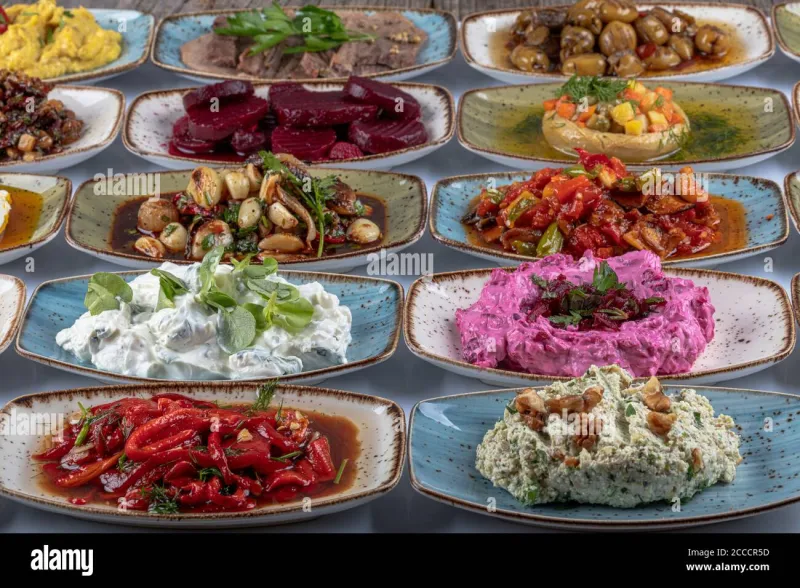
Photo: Turkish meze spread appetizers colorful dishes traditional table Istanbul, via c8.alamy.com
Ask most Americans what they know about Turkish food, and you'll hear the same short list: kebabs, baklava, maybe some hummus (which is, technically, more of a Levantine thing). What rarely makes the conversation is the part of a Turkish meal that locals consider the most important: the meze spread.
In Ataşehir, meze isn't a warm-up act. It's the whole performance. A proper table might hold eight, ten, even twelve small dishes before anyone even thinks about ordering a main. Some of these are familiar — stuffed grape leaves, yogurt dips, grilled halloumi. But many of them are dishes that rarely survive the trip to American Turkish restaurant menus, either because the ingredients are tricky to source or because they're so tied to seasonal rhythms and family tradition that they've never been properly written down.
We went looking for those dishes. Here's what we found.
Why Ataşehir's Meze Culture Is Different
Atatehir sits on the Asian side of Istanbul, and its food culture reflects that geography — slightly more conservative in some ways, more rooted in Anatolian tradition, and deeply shaped by the waves of migration that brought families from all over Turkey into one dense urban district. The meze you find here isn't just Istanbul meze. It's a patchwork of regional influences: Black Sea dishes alongside Aegean ones, Central Anatolian staples rubbing elbows with recipes that came from families who moved from the Balkans generations ago.
That mix produces a meze table that's more varied and more surprising than what you'd find at a tourist-facing restaurant on the European side of the city.
Arnavut Ciğeri: The Appetizer That Deserves More Respect
Albanian Liver — Arnavut Ciğeri — sounds like it should be divisive, and maybe it is. But in Ataşehir's meyhanes (traditional taverns), a plate of this comes out almost automatically with the first round of rakı, and it converts skeptics reliably.
The technique is what makes it. Lamb liver is cut into small cubes, dusted with flour, and fried fast in very hot oil until the outside is crisp and the inside stays tender. It's served warm, scattered with paper-thin raw onion rings that have been soaked in water to soften their bite, and finished with a heavy hand of dried red pepper flakes and flat-leaf parsley.
To make it at home: Source lamb liver from a halal butcher — most large American cities have them, and the quality is generally excellent. Soak the liver in milk for 30 minutes before cooking to mellow any bitterness. Dry thoroughly before flouring. The fry needs to be quick and hot; if the oil isn't ready, the liver will steam instead of crisping.
For presentation: Serve on a small wooden board with the onion rings piled loosely on top. A wedge of lemon on the side adds color and cuts the richness. This is genuinely Instagram-worthy when plated with intention.
Fava: The Dish That Announces Spring
In Ataşehir, the appearance of fava on a meze table is a seasonal signal — it means spring has arrived, the broad beans are fresh, and someone's grandmother has been cooking since morning.
Fava (not to be confused with the Middle Eastern fava bean dip of the same name) is a Turkish preparation made from dried split broad beans, cooked down into a smooth, creamy purée and then chilled in a mold until it holds its shape. It's sliced and served cold, drizzled with good olive oil, and topped with fresh dill and sometimes a scattering of caramelized onions.
The flavor is delicate, almost buttery, with a faint earthiness that pairs beautifully with sharp white wine or a cold beer. It's not flashy. It's the kind of dish that makes you stop mid-bite and think, why haven't I been eating this my whole life?
To source ingredients in the US: Dried split fava beans are available at most Middle Eastern and Mediterranean grocery stores, and increasingly at Whole Foods and specialty markets. Bob's Red Mill also carries them. The key is cooking them long enough that they fully collapse — no lumps.
Presentation tip: Use a small ramekin or silicone mold to set individual portions. Unmold onto a plate, drizzle with your best olive oil, and finish with a crown of fresh dill. The contrast of pale yellow against bright green photographs beautifully.
Semizotu Salatası: The Weed Your Salad Has Been Missing
Purslane — semizotu in Turkish — is one of those ingredients that Americans have largely decided is a weed while much of the rest of the world considers it a vegetable. In Ataşehir, it shows up in late summer meze spreads dressed simply with yogurt, garlic, and a splash of olive oil, and it's one of those combinations that's so good it almost feels unfair.
Purslane has a faintly succulent texture and a mild lemony flavor that plays perfectly against thick, tangy yogurt. The garlic is subtle — just enough to remind you it's there. A drizzle of olive oil ties it together.
Finding purslane in the US: Farmers markets are your best bet in summer, particularly those with vendors who serve Middle Eastern or Latin American communities (purslane is common in Mexican cooking too, sold as verdolagas). Some Asian grocery stores carry it as well.
Kabak Çiçeği Dolması: Stuffed Squash Blossoms for Summer Tables
Stuffed grape leaves get all the attention, but in Ataşehir during summer, kabak çiçeği dolması — squash blossoms filled with herbed rice — are the ones that disappear from the meze table first.
The filling is a loose mixture of short-grain rice, pine nuts, currants, fresh mint, dill, and a pinch of cinnamon. The blossoms are stuffed gently, folded closed, and cooked in a shallow broth until tender. They're served at room temperature, which means they're genuinely easy to make ahead — a huge advantage when you're hosting.
Sourcing blossoms in the US: Squash blossoms are a summer farmers market staple in most American cities. They're also increasingly available at Trader Joe's and Whole Foods during peak season. Buy them the day you plan to use them — they don't keep.
Presentation: Arrange them in a single layer on a long white platter. A drizzle of good olive oil, a squeeze of lemon, and a few torn mint leaves make this look like something out of a food magazine.
Building Your Own Ataşehir Meze Table
The secret to a proper meze spread isn't any single dish — it's the combination. You want contrast: something rich alongside something bright, something warm next to something chilled, something familiar to anchor the more adventurous options.
Start with two or three dishes you're comfortable with, then add one thing that's new to you. That's how Ataşehir does it too — tradition and curiosity sitting side by side, sharing a table.
And don't rush it. The best meze spreads are the ones that slow dinner down to a conversation.