Harvest Calendars and Homesickness: How Ataşehir's Market Seasons Follow Turkish-Americans Across the Ocean
There's a particular kind of longing that doesn't have a clean English word for it. In Turkish, hüzün gets close — that bittersweet ache for something beautiful that's just out of reach. For a lot of Turkish-Americans, that feeling hits hardest not at weddings or holidays, but in the produce aisle of a grocery store somewhere in New Jersey or Houston or Los Angeles, when the eggplants look almost right but not quite, and the tomatoes smell like nothing at all.
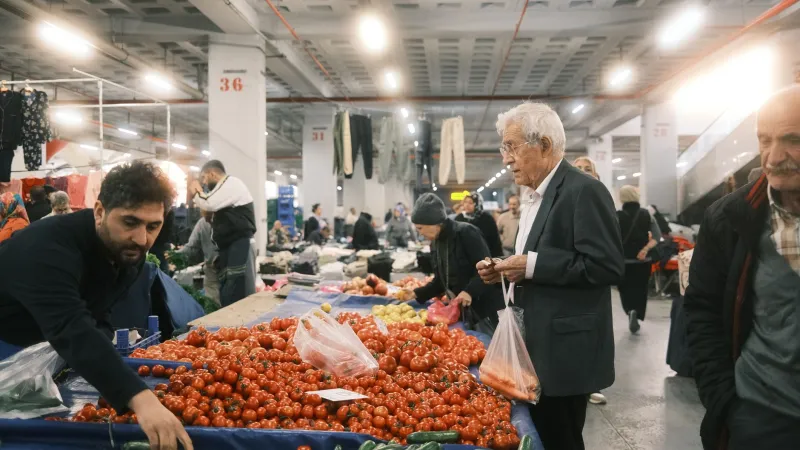
Back in Ataşehir, the open-air markets — the pazar — don't just sell vegetables. They tell you what month it is. They tell you what you're supposed to be cooking.
The Market as Calendar
Walk through the Tuesday or Friday pazar in Ataşehir on any given week and you're essentially reading a seasonal almanac. Late spring means fat, glossy green peppers and the first small eggplants of the year — the ones just right for stuffing. By July, tomatoes have taken over entire stalls, deep red and heavy, sold by the kilo to families who will spend their August weekends making domates salçası, the slow-cooked tomato paste that gets jarred and stored and quietly powers the entire winter kitchen.
Come September, the markets shift again. Figs, quinces, the last of the summer squash. Then the cool-weather vegetables arrive — leeks, celeriac, winter greens — and suddenly everyone's grandmother is making kereviz with lemon and olive oil, or a pot of lentil soup that fills the whole apartment building with warmth.
This isn't just a nice story about seasonality. It's the actual infrastructure of Turkish home cooking. The pazar calendar isn't something cooks consult — it's something they live inside. The availability of produce doesn't just influence what gets made for dinner. It determines which recipes get pulled out, which family traditions get activated, which smells fill which kitchens at which times of year.
When the Calendar Doesn't Cross the Ocean
Seval Arslan moved from Ataşehir to the Chicago suburbs about eleven years ago. She'll tell you, without any hesitation, that the hardest part of cooking Turkish food in America isn't finding the ingredients. It's the timing.
"In Istanbul, I never had to think about it," she says. "You go to the pazar, you see what's there, and you know what to cook. Here, everything is available all the time and nothing is ever right."
That's the paradox American grocery culture creates for diaspora cooks. The abundance is real — you can find eggplant in February if you want it — but the quality is seasonal even when the availability isn't. And more than that, the emotional logic of Turkish cooking is deeply tied to produce timing. İmam bayıldı isn't just a dish you make when you feel like it. It's a late-summer dish, made when eggplants are at their peak and tomatoes are almost embarrassingly ripe. Making it in March with a waxy, flavorless eggplant isn't just disappointing. It feels wrong in a way that's hard to explain to someone who didn't grow up with that seasonal rhythm.
Seval's solution, developed over years of trial and error, is what she half-jokingly calls her "Istanbul calendar." She tracks what's in season in Ataşehir using a combination of WhatsApp messages from her mother and a few Turkish food accounts she follows online. Then she cross-references with what's actually good at her local farmers market and the Turkish grocery in her neighborhood.
"I don't try to cook Istanbul food with American timing anymore," she explains. "I wait until the seasons line up."
What Aligns, and What Doesn't
The good news for Turkish-Americans in the US is that the overlap is more significant than you might expect. Istanbul and the continental US share similar temperate rhythms in many regions. Tomato season in the Midwest tracks reasonably close to tomato season on the Marmara coast. Eggplant peaks in late summer on both sides of the Atlantic. Stone fruits — the cherries, plums, and apricots that show up in everything from komposto to savory lamb dishes — arrive in June and July in both places.
The harder gaps to bridge involve specific regional produce that simply doesn't travel or translate. The small, slightly bitter wild greens that show up in Ataşehir's markets in early spring — the kind that get cooked down with olive oil and served simply — have no real American equivalent. The particular variety of dried fig used in winter desserts, the specific green plums (erik) that get eaten with salt as a snack, the tiny cucumbers that taste completely different from anything sold in a US store: these are the real losses.
For these, diaspora cooks improvise. Seval's mother sends dried goods in packages a few times a year — tarhana, dried eggplant and peppers for stuffing, certain spice blends. The Turkish grocery stores in larger American cities fill in some gaps. And for the rest, there's a kind of creative substitution that becomes its own tradition over time.
The Memory Embedded in Soil
Food scientists will tell you that flavor is genuinely affected by soil composition, water mineral content, and microclimate — the concept of terroir that wine people talk about applies to vegetables too. The reason an Ataşehir tomato tastes different from a California tomato isn't just nostalgia. It's chemistry.
But there's also something that isn't chemistry. The way a particular smell or texture activates a whole web of memory and association — the feeling of being in your grandmother's kitchen, or at a summer table on a terrace somewhere, or at a pazar stall where the vendor knows your family by name. That's not something any amount of ingredient-sourcing can fully recreate.
What it can do, though, is get close enough to matter. Seval's daughter, who was born in the US and has visited Istanbul only twice, has started asking to help in the kitchen when the tomatoes at the farmers market look good. She doesn't have the same memories her mother carries. But she's building her own.
"That's the whole point," Seval says. "The food is how it continues. You teach the timing, you teach the patience, and eventually they understand why we wait for the right tomatoes."
Finding Your Own Pazar Rhythm
For Turkish-Americans trying to reconnect with this seasonal logic, a few practical anchors help. Farmers markets — especially in cities with significant Turkish or broader Middle Eastern communities — often carry the produce varieties closest to what you'd find in an Istanbul pazar. The timing of US farmers market seasons, particularly in the mid-Atlantic and Midwest, tracks well with Istanbul's calendar for most summer and fall produce.
Turkish grocery stores in cities like New York, Chicago, Los Angeles, and Houston stock imported and specialty items that bridge the remaining gaps. And increasingly, online communities of diaspora cooks share tips on what's in season in Turkey right now, which American substitutes work best, and which shortcuts are worth taking.
The pazar in Ataşehir will keep running its seasonal calendar whether anyone in the diaspora is watching or not. The trick is learning to read it from far away — and letting it remind you, twice a week, what you're supposed to be cooking.