Ancient Wheat, Modern Loaves: Meet the Ataşehir Bakers Bringing Turkey's Forgotten Grains Back to Life
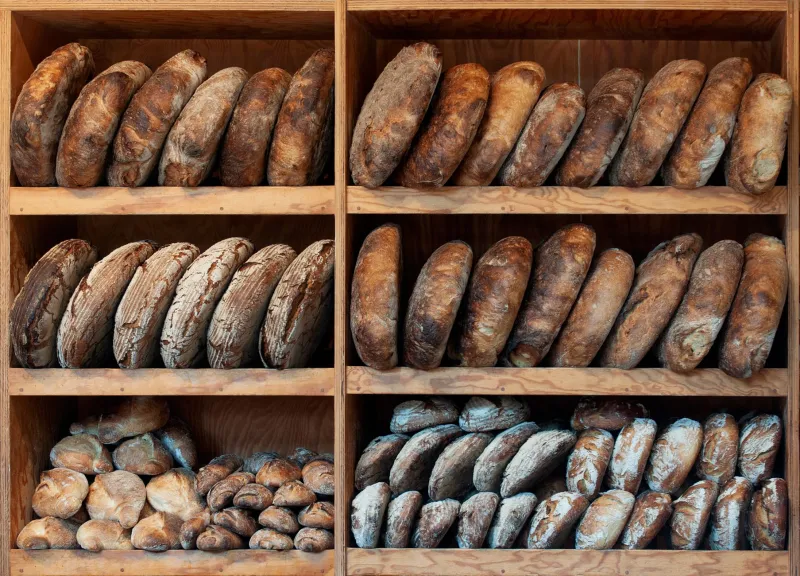
There's a loaf sitting on a wooden shelf in a small bakery off Kayışdağı Caddesi that looks, honestly, a little rough around the edges. It's darker than you'd expect, slightly uneven, with a crust that cracks when you press it. The baker, Hüseyin Usta, slides a slice toward you without ceremony. You take a bite — and then you stop talking for a moment, because the flavor is doing something you didn't anticipate. Nutty, faintly sweet, with an earthiness that lingers. It tastes, somehow, like the idea of bread before bread became ordinary.
Hüseyin didn't arrive at this loaf overnight. It took him the better part of three years, a lot of failed batches, and a stubborn curiosity about what Turkish wheat actually used to taste like before commodity farming quietly replaced most of it.
What Happened to Turkey's Ancient Grains
Turkey sits at one of the world's most significant agricultural crossroads. The Fertile Crescent — that ancient sweep of land stretching from the Levant through Anatolia — is where wheat cultivation is believed to have begun roughly ten thousand years ago. Einkorn, emmer, and dozens of regional landrace varieties once grew across Turkish soil, each adapted to local microclimates and carrying distinct flavor profiles.
Then came the Green Revolution of the mid-twentieth century. High-yield hybrid wheat varieties were introduced across Turkey, just as they were across much of the world, and older strains were gradually pushed aside. Farmers adopted the new seeds because they made economic sense — higher output, more predictable harvests. By the 1980s and 1990s, many heritage varieties had retreated to the margins: a few remote villages, university seed banks, the occasional stubborn smallholder who hadn't gotten the memo.
What was lost in that transition wasn't just genetic diversity. It was flavor. Older wheat varieties tend to have more complex gluten structures, higher mineral content, and a depth of taste that modern bread wheat simply doesn't replicate. Ask any serious baker and they'll tell you the same thing: the grain is everything.
Ataşehir's Bakers Start Asking Questions
Atatürk's Istanbul was always a city of migration, and Ataşehir — one of the newer, faster-growing districts on the Asian side — has always absorbed people from across Anatolia. That mix of regional backgrounds turned out to be quietly useful when a handful of local bakers started wondering whether the wheat their grandparents used still existed somewhere.
Several Ataşehir bakers began reaching out to small farms in central and eastern Anatolia around five or six years ago, looking for growers still cultivating older strains. What they found surprised them. Pockets of einkorn — known in Turkish as siyez buğdayı — had survived in places like Kastamonu province, where a few farming families had kept the grain going almost by habit. Emmer wheat (kavılca) was still being grown in parts of the Black Sea region. Neither variety had much commercial presence, but they weren't gone.
The challenge was getting those grains to a bakery in Istanbul in usable form. Industrial milling equipment isn't designed for ancient wheat, which has a different husk structure and requires different handling. Some bakers sourced small stone mills. Others partnered with a handful of specialty millers who had started catering to Turkey's slowly emerging artisan bread scene.
What These Breads Actually Taste Like
If you're used to American artisan sourdough — the kind that's had a serious cultural moment over the last decade — heritage grain bread from Ataşehir will feel both familiar and completely different.
Einkorn loaves tend to be denser, with a tighter crumb and a flavor that leans toward toasted hazelnuts and mild honey. They're not trying to be airy or Instagram-perfect. Emmer bread has more structure and a slightly grassy, mineral quality that pairs extraordinarily well with aged cheese or a drizzle of good olive oil. Both varieties have lower gluten content than modern wheat, which means they behave differently in the oven and require bakers to adjust their technique — longer fermentation times, gentler shaping, a more intuitive read of the dough.
Hüseyin describes working with siyez as a conversation. "Modern wheat does what you tell it," he says. "Old wheat has its own opinion."
The Nutrition Angle Americans Are Already Paying Attention To
For US consumers who've spent years navigating the crowded world of gluten-free, ancient grain, and sourdough trends, the heritage wheat movement in Ataşehir will sound familiar in the best way. American interest in einkorn has been growing steadily — you can find it in Whole Foods, in small-batch flour subscriptions, in the back pages of every serious bread-baking book published in the last five years.
What's different about the Ataşehir approach is that it isn't a wellness trend dressed up as food. It's bakers following flavor back to its source and ending up somewhere nutritionally interesting almost by accident. Heritage wheats tend to carry higher levels of protein, zinc, and B vitamins compared to modern varieties. Their lower glycemic impact is something researchers are still studying, but early findings have drawn attention.
More practically, many people who report sensitivity to modern wheat find ancient varieties easier to digest — a detail that's anecdotal for now but persistent enough that it keeps coming up in conversation.
A Movement, Not a Moment
What's happening in Ataşehir isn't a trend that arrived from a food magazine. It grew out of something more instinctive: bakers who grew up eating bread that tasted a certain way, who moved to the city and found that taste missing, and who went looking for it.
A few of these bakers have started hosting small workshops, teaching home cooks how to work with heritage flours. Some are collaborating directly with Anatolian farmers, placing advance orders that give small growers the financial stability to keep growing varieties that would otherwise disappear entirely. It's a feedback loop that benefits everyone in the chain — and one that American farm-to-table advocates would recognize immediately.
The loaves aren't cheap, and they're not always easy to find. You might have to know someone, or visit on the right day, or follow the right bakery on social media long enough to catch a post about a new batch. But that's part of what makes them feel like something worth seeking out.
Bread has always been the most honest thing on any table. In Ataşehir, a few bakers are making sure it stays that way — one ancient grain at a time.