Sealed in a Jar, Kept for a Lifetime: The Handmade Preserves That Define Ataşehir's Table
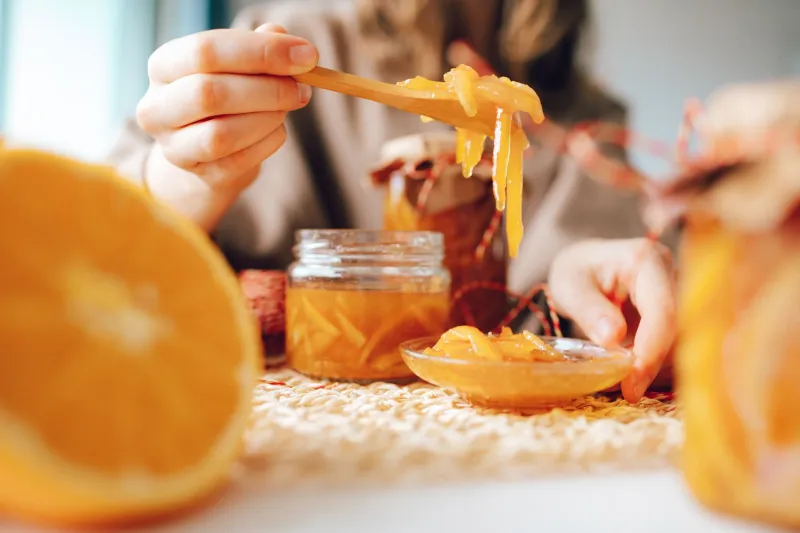
If you've ever sat down to a proper Turkish breakfast — the kind spread across a low table with enough small dishes to make you lose count — you've probably noticed the jars. Amber-colored quince paste. Deep burgundy sour cherry compote. A pale, almost luminous rose petal preserve that looks too pretty to eat. These aren't afterthoughts. In Ataşehir, they're the whole point.
Handmade fruit preserves, known in Turkish as reçel or marmelat depending on texture and technique, have long been a cornerstone of home kitchens across Istanbul. But in Ataşehir's older neighborhoods, where apartment balconies still double as informal pantries and grandmothers measure sugar by feel rather than weight, the tradition runs especially deep. These jars don't just taste good. They tell you what month it is, which family made them, and how much someone loves you.
A Kitchen Calendar You Can Taste
Ask Fatma Hanım, a retired schoolteacher who's been making preserves in her Ataşehir apartment for over forty years, what she's working on in a given week, and she'll tell you without hesitation. "In May, it's rose petals and strawberries. June is sour cherry season — I make maybe thirty jars. By August, I'm doing fig and green walnut. Come November, quince. There's always something."
This rhythm is less a hobby than a discipline. Turkish preserve-making is tightly tied to the agricultural calendar, and even in a dense urban district like Ataşehir, the seasons still dictate the kitchen. Fruits arrive at neighborhood markets in short, intense windows. Miss the sour cherry week, and you wait another year. That urgency gives these preserves a kind of earned quality that you simply can't replicate with a supermarket jar.
For American readers who grew up with Smucker's or Bonne Maman on the breakfast table, the concept isn't entirely foreign — seasonal canning and preserving have had a real comeback in the US, especially in farm-to-table and homesteading communities. But the Turkish approach carries a different emotional weight. It's less about self-sufficiency and more about continuity. You make the jam your mother made, with fruit from the same type of vendor, using the same copper pot if you're lucky enough to still have one.
The Fruits That Define the District
Not every fruit gets the same treatment, and Ataşehir's local jam makers are particular about their ingredients. Sour cherries (vişne) are considered the gold standard — their tartness requires careful sugar calibration, and the resulting compote has a complexity that sweet cherry varieties can't match. "Americans love sweet," laughs Hasan Bey, who sells handmade preserves at a small stall near the Ataşehir weekly bazaar. "But vişne teaches you to appreciate a little bitterness. It makes the sweetness mean something."
Quince (ayva) is another pillar. Slow-cooked into a dense, jewel-toned paste, it's the preserve that shows up on formal breakfast tables and holiday spreads alike. The cooking process is long — quince needs time and patience to surrender its natural pectin and deepen into that characteristic garnet color. Some families add a cinnamon stick or a few cloves; others consider any spice an intrusion.
Then there's rose petal reçel, perhaps the most poetic of the bunch. Made from fragrant, deeply pigmented roses (the ornamental kind won't do), it's a preserve that tastes like a garden smells on a warm morning. In Ataşehir, it's considered a gesture of particular affection to offer a guest rose petal jam with their tea. It signals that you went to some trouble — because you did.
The Technique Is the Story
What separates a handmade Turkish preserve from a commercial product isn't just ingredients — it's method. Most Ataşehir jam makers still use a ters kaşık test, holding a spoon of hot preserve upside down to check how it drips (or doesn't). They skim foam with a patience that a factory line can't simulate. They cook in small batches to maintain control over texture, often stirring constantly for an hour or more.
Fatma Hanım learned from her own mother, who learned from hers in a village outside Kastamonu before the family eventually settled in Istanbul. "She never wrote anything down," Fatma says. "I just watched. Then I made mistakes. Then I stopped making mistakes." That oral, observational transmission is common across Ataşehir's preserve-making community. Recipes exist, but they're more like guidelines — the real knowledge lives in the hands.
For those who want to try at home, the fundamentals are approachable: equal weights of fruit and sugar, a low and slow cook, sterilized jars. But the intuitive layer — knowing when the preserve is done, how much lemon juice to add to balance acidity, when to pull the pot off the heat — that takes repetition. And probably a grandmother willing to watch you and offer corrections.
More Than Breakfast: Preserves as Hospitality
In Turkish culture, offering food is an act of welcome, and handmade jam sits near the top of the hospitality hierarchy. A jar given as a gift carries the hours of labor behind it. A breakfast table with homemade reçel signals that the host didn't cut corners, that you were worth the effort.
This isn't lost on the younger generation in Ataşehir, even if their relationship with the tradition is shifting. Some are learning the craft for the first time in their thirties, drawn by a desire to reconnect with something slower and more tactile than their daily lives. Others are experimenting — adding cardamom to the quince, pairing sour cherry compote with cheese in ways their grandmothers might raise an eyebrow at, but probably secretly appreciate.
Hasan Bey sees both continuity and change at his bazaar stall. "The young people, they come. They ask questions. They want to know which fruit is best this week." He pauses and grins. "That's how it starts."
Why It Matters Now
In an era of overnight shipping and year-round produce, the idea of a food tied to a specific two-week window in June feels almost radical. But that's exactly what makes Ataşehir's preserve culture worth paying attention to. These jars are a form of memory storage — of seasons, of family kitchens, of the particular taste of a sour cherry that was perfectly ripe on a Tuesday in late June.
For the Turkish diaspora in the US, a jar of homemade vişne reçeli can close a lot of distance. And for food enthusiasts curious about what authentic Turkish home cooking really looks like beyond the restaurant menu, the breakfast table — with its small, careful jars — is a very good place to start.