More Than Eggs and Toast: The Unhurried Magic of a Turkish Morning Spread in Ataşehir
Somewhere between your third cup of çay and your second helping of menemen, time does something strange in Ataşehir. It slows down. The noise of Istanbul — the ferries, the traffic, the relentless forward motion of a city of 15 million — seems to hold its breath while the breakfast table does its quiet, generous work.
That's not an accident. In Turkish culture, kahvaltı (breakfast, literally "before coffee" — though tea almost always shows up first) is one of the most intentional meals of the day. And in Ataşehir, a district that straddles the line between old-school Istanbul neighborhood life and modern urban energy, the morning table remains one of the last places where that intention is fully honored.
What Actually Goes on a Turkish Breakfast Table
If your only frame of reference for Turkish breakfast is a hotel buffet or a brunch spot in Brooklyn slapping the word "Mediterranean" on a menu, let's reset expectations.
A proper Ataşehir kahvaltı isn't a single dish. It's a spread — a collection of small plates, each one earning its place on the table. You'll find beyaz peynir (white cheese, similar to feta but creamier and less aggressively salty), kaşar cheese, olives in at least two varieties, sliced tomatoes and cucumbers, soft-boiled eggs, honey pooling next to thick kaymak (clotted cream), house-made jams, and a basket of fresh bread that never quite empties fast enough.
Then there are the hot additions: menemen, a loose scramble of eggs cooked with tomatoes, peppers, and sometimes spicy sucuk sausage; börek, flaky pastry stuffed with cheese or potato; and simit, the sesame-crusted bread rings that are as much a symbol of Istanbul as the Bosphorus itself.
All of it arrives at the table at once, or close to it. There's no "first course." There's no waiting. You just begin.
The Neighborhood Spots That Keep the Tradition Alive
On weekend mornings, the kahvaltı salons of Ataşehir fill up early. Families stake out tables by 9 a.m. Groups of friends who've known each other for decades settle in with no particular plan to leave before noon. The tea glasses — those iconic tulip-shaped bardaks — are refilled without being asked.
Fatma Hanım, who has run a small breakfast spot near Küçükbakkalköy for over a decade, puts it simply: "My customers don't come here just to eat. They come here to sit together. The food is the reason, but it's not the point."
That distinction matters. In a culture where hospitality is essentially a moral value, the breakfast table is one of the purest expressions of it. You don't serve someone a rushed plate of food and send them on their way. You set the table carefully. You keep the tea coming. You make space.
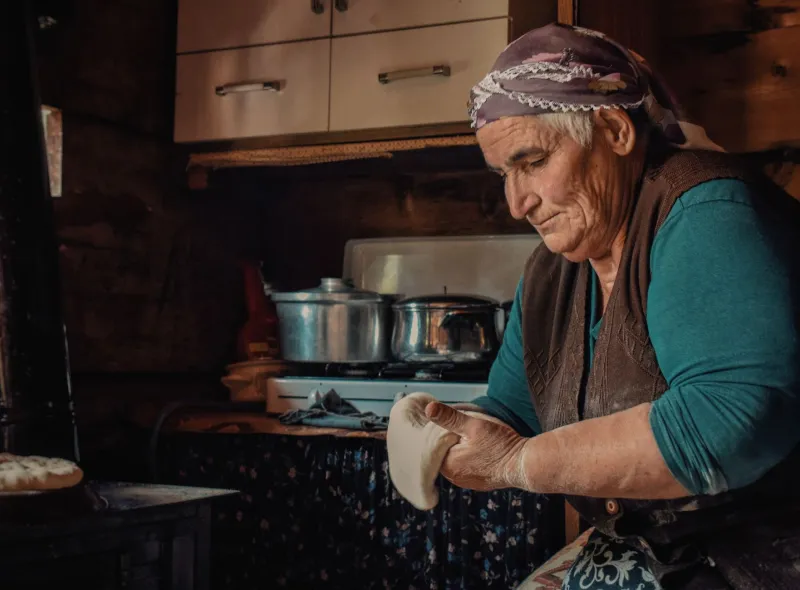
Süleyman Bey, a retired schoolteacher who has lived in Ataşehir for nearly forty years, remembers when Sunday kahvaltı would last until early afternoon. "The whole family, cousins included. My mother would start preparing the night before — the jams, the cheese, the bread. It wasn't about expense. It was about effort. That effort was the love."
How This Compares to What Americans Know as "Brunch"
Here's where things get interesting for US readers. American brunch culture shares some surface-level DNA with Turkish kahvaltı — the leisurely pace, the social element, the eggs-at-the-center energy. But the underlying logic is pretty different.
American brunch tends to be built around individual entrées. You order your thing, your friend orders their thing, and you share maybe a side or two. It's also typically anchored to alcohol — the mimosa, the Bloody Mary — in a way that Turkish breakfast simply isn't.
Kahvaltı, by contrast, is inherently communal. Everything on the table belongs to everyone. You reach, you share, you pile a little of this and that onto your bread. The meal is the conversation, not the backdrop to it.
There's also the question of pace. Turkish breakfast doesn't really have an endpoint. You eat until you're satisfied, then you drink tea and talk, then maybe you eat a little more. The idea of a restaurant rushing you out for a second seating would be genuinely baffling.
Building an Ataşehir-Style Breakfast at Home in the US
Good news: you don't need to book a flight to Istanbul to experience this. Most of what goes on a proper Turkish breakfast table is findable in the US, especially if you're near a city with a decent Middle Eastern or Mediterranean grocery scene.
Here's a starter shopping list:
- White cheese: Look for "beyaz peynir" at Turkish or Middle Eastern grocery stores. In a pinch, a mild Bulgarian feta works. Avoid the sharp, crumbly Greek feta — the texture is wrong.
- Kaşar cheese: A semi-hard yellow cheese. Some specialty stores carry it; otherwise, a young Gouda or mild provolone can substitute.
- Olives: Go for variety. A mix of black and green, ideally oil-cured.
- Simit: Turkish bakeries in cities like New York, Chicago, and Los Angeles often carry these. Otherwise, a sesame bagel is the closest American equivalent, though the texture differs.
- Kaymak: Clotted cream is the closest substitute; some British import shops carry it. Mascarpone works in a pinch.
- Sucuk: Turkish-style beef sausage, available at halal grocery stores.
- Tea: Turkish çay is black tea brewed strong in a double teapot (çaydanlık). Steep it longer than you think you need to.
The setup matters as much as the ingredients. Use small plates. Put everything on the table at once. Don't rush. Make more tea before anyone asks for it.
Most importantly, invite people. Kahvaltı is not a solo activity. It's a table that expands to fit whoever shows up.
Why It Matters That We Keep Talking About This
For members of the Turkish diaspora in the US, the morning table is often one of the most vivid food memories — and one of the hardest things to replicate. The ingredients can be sourced. The recipes can be followed. But the specific weight of a Sunday morning in Ataşehir, the sound of tea being poured, the unhurried conversation — that's harder to package.
What we can do is understand what those mornings were actually about, and try to honor that spirit wherever we are. Kahvaltı isn't a menu. It's a mindset: that the people at your table deserve your time, your care, and a glass of tea that never quite runs out.
Set the table. Sit down. Stay a while.