Same Kitchen, Different Pantry: How Ataşehir's Spice Story Changed Over Five Decades
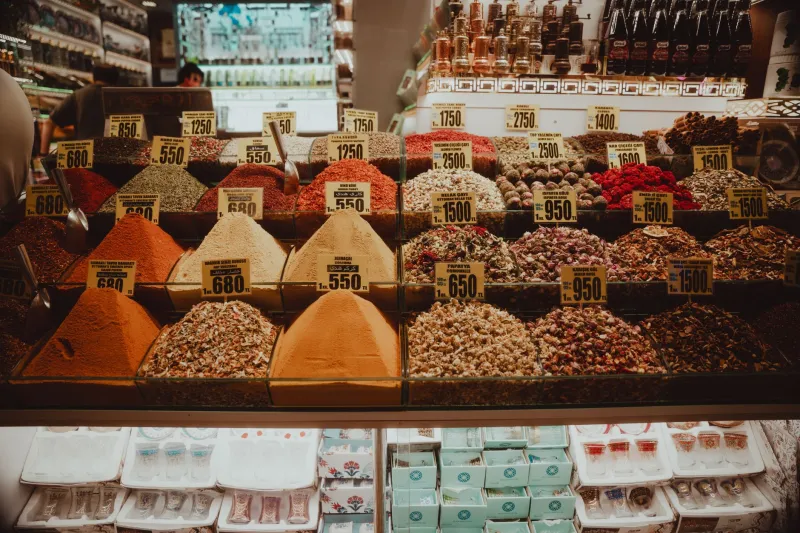
Ask anyone who grew up cooking in Ataşehir during the 1970s where they got their mahlab, and you'll probably get a look that mixes nostalgia with mild confusion at the question itself. Back then, you didn't source spices. You walked to the same vendor your mother walked to, handed over a few lira, and went home. The supply chain was invisible because it was ancient — worn smooth by centuries of use.
Fifty years later, that same jar of mahlab might have been ordered off an online Turkish grocer in New Jersey, sourced from a Syrian cooperative, and shipped overnight. The spice is technically the same. The story behind it is almost unrecognizable.
What Ataşehir's Kitchens Actually Looked Like in the 1970s
Atatürk-era Istanbul was still a city where regional identity showed up clearly on the spice shelf. Ataşehir, then a far less developed district on the Asian side, drew its culinary character from a mix of Anatolian migrants who had settled there after internal waves of migration in the 1950s and '60s. These families brought their regional spice habits with them — the heavy cumin preferences of Central Anatolia, the red pepper pastes of the southeast, the dried herb bundles of the Aegean coast.
Sumac was everywhere, but it was almost always locally sourced from markets connected to producers in southeastern Turkey, particularly around Gaziantep and Şanlıurfa. Aleppo pepper — known in Turkish kitchens simply as pul biber — came from just across the Syrian border with little ceremony. The trade was informal, consistent, and deeply tied to cross-border relationships that had existed for generations.
Mahlab, the dried cherry pit kernel used in sweet breads and certain pastries, moved through Armenian and Greek merchant networks that still operated through Istanbul's covered bazaars. You knew which stall had it. You knew the man behind the counter.
The Disruptions Nobody Talked About
Things started shifting in the 1980s, though not dramatically at first. Turkey's economic liberalization under Turgut Özal opened the country to global trade in ways that gradually restructured how food moved. Supermarket culture arrived. Packaged spice brands emerged. The informal bazaar vendor didn't disappear, but he started competing with shrink-wrapped alternatives.
More quietly, the political turbulence across Turkey's southern borders began to interrupt those ancient cross-border spice flows. The supply of Syrian Aleppo pepper — the real thing, dried and oiled in the specific way that gives it that fruity, moderate heat — became less predictable through the 1990s and into the 2000s. What filled the gap was often a substitute: hotter, drier, less complex. Most cooks adapted without fully registering the change.
The Syrian civil war after 2011 effectively severed what remained of the direct Aleppo pepper trade. Today, authentic pul biber from the Aleppo region is a specialty product, not a staple. Turkish producers have stepped in with their own versions — Marash and Urfa peppers have actually gained international recognition in the process — but the flavor profile is genuinely different. If your Turkish grandmother's stuffed pepper recipe tastes slightly off no matter what you do, this might be part of the answer.
The Diaspora Effect and the Rise of Specialty Sourcing
Here's where the story gets interesting for American readers specifically. Turkish diaspora communities in cities like New York, Chicago, and Los Angeles spent decades quietly building their own supply networks. Turkish grocery stores in Queens and Paterson, New Jersey became unlikely custodians of ingredient authenticity, importing directly from producers who still did things the old way.
These stores were, for a long time, invisible to anyone outside the community. But the food internet changed that. Food bloggers, then recipe developers, then chefs started pointing toward these shops. A home cook in Austin, Texas who wants real sumac — the tart, almost lemony variety from southeastern Turkey rather than the blander versions sold in generic spice aisles — can now find it. It requires some searching, but it's findable.
E-commerce has accelerated this further. Specialty Turkish food retailers now ship nationwide. Some work directly with small-batch producers in Gaziantep or Kahramanmaraş. The irony is that in certain narrow ways, an enthusiastic American home cook today has access to more authentic Turkish regional ingredients than a casual cook in a major Turkish city, where supermarket homogenization has done its own flattening.
What This Means for 'Authentic' Turkish Cooking
Authenticity is a word that gets thrown around a lot in food writing, and it usually creates more heat than light. But the spice sourcing question is a legitimate one, because these ingredients aren't interchangeable. Sumac from a specific Turkish producer carries a tartness profile that affects the balance of a dish. Mahlab from an Armenian-sourced supplier has a slightly different bitterness than what you'll find in a generic Middle Eastern grocery blend. These differences are subtle but cumulative.
Cooks in Ataşehir today navigate this in real time. The older generation often has strong opinions about which current products approximate what they remember, and those opinions are worth hunting down. Younger Ataşehir cooks tend to be more pragmatic — they'll use what's available and adjust technique to compensate.
For American home cooks trying to recreate Turkish dishes faithfully, the practical advice is this: spend as much time sourcing as you do on the recipe itself. Look for Turkish or Middle Eastern specialty grocers, particularly those serving diaspora communities. Ask specifically about origin when you can. And when you find a source that tastes right — that has the depth and specificity you're after — stock up.
The Vendor Still Matters
There's a spice seller in a small covered market near the older part of Ataşehir who has been in the same spot for over thirty years. He doesn't have a website. He doesn't ship to New Jersey. But the regulars who visit him talk about his sumac the way wine people talk about a good vintage. It's specific, they'll tell you. You can taste where it's from.
That kind of knowledge — the vendor who knows the producer, the producer who knows the soil — is exactly what got lost in the shuffle of five decades of trade disruption and global supply chains. It hasn't disappeared entirely. But finding it now requires intention in a way it simply didn't when your grandmother was cooking.
The pantry changed. The recipes mostly stayed the same. Learning to read that gap is one of the more honest things you can do as a cook.