Fire, Smoke, and Something Else Entirely: The Wood-Burning Secrets Behind Ataşehir's Most Unforgettable Food
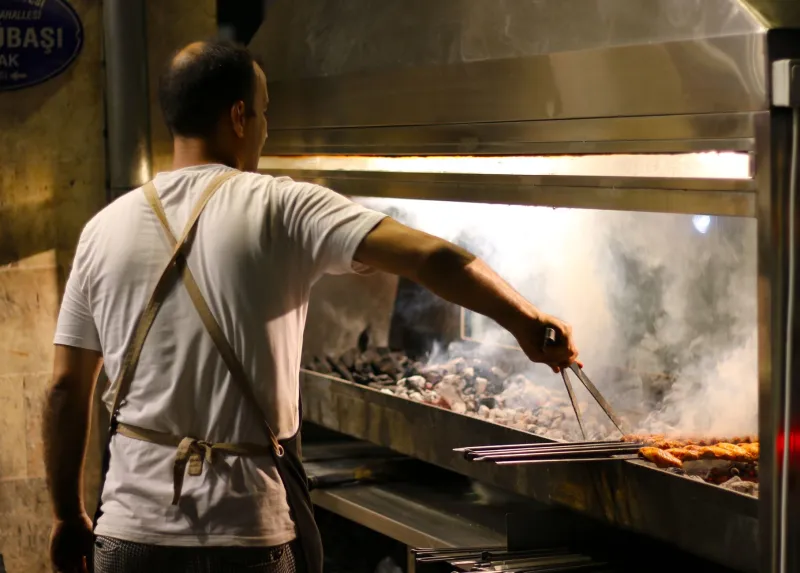
There's a moment, if you've ever stood near a proper wood-fired grill in Ataşehir, when the smell hits you before anything else does. It's not just smoke. It's something layered — sweet char, mineral heat, the faint ghost of whatever was cooked an hour before. That smell is a kind of language, and the cooks who work these fires speak it fluently.
Wood-fire cooking in this corner of Istanbul isn't a trend or a throwback. It's simply how things have always been done. And while gas burners and electric ranges have taken over most home kitchens, the street stalls, neighborhood lokantası, and a handful of stubborn home cooks in Ataşehir are keeping the wood-fire tradition burning — literally.
Not All Wood Is Created Equal
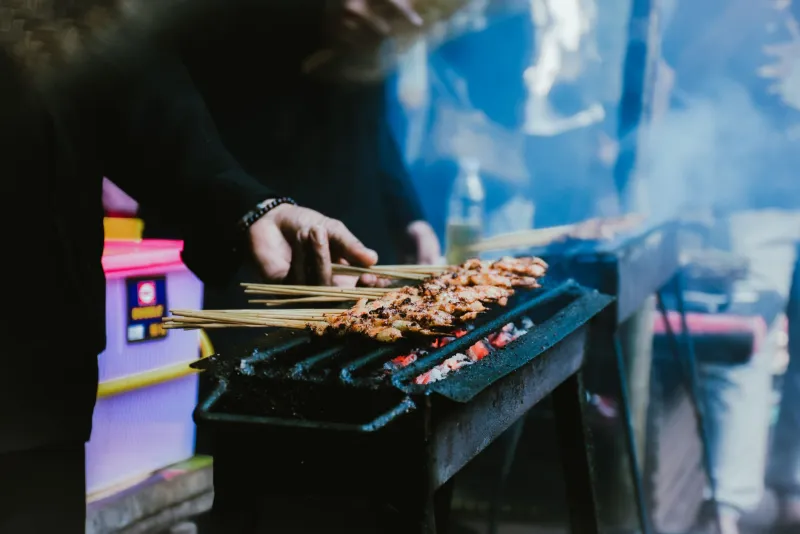
Ask Mehmet Usta, who has operated a wood-fired kebab station near Ataşehir's Küçükbakkalköy neighborhood for over thirty years, what his most important tool is, and he won't point to his long-handled skewers or his handmade mangal. He'll gesture toward a stack of dried oak logs propped against the wall.
"The wood is everything," he says, brushing ash from his apron. "Use the wrong wood, you ruin the meat. Doesn't matter how good the lamb is."
In Ataşehir's wood-fire tradition, the choice of fuel is almost as deliberate as the choice of ingredients. Oak and almond wood are prized for their dense, slow-burning coals that produce consistent, radiant heat without flaring. Fruit woods — cherry, apple, fig — are used more selectively, often for poultry or vegetables, where a lighter, slightly sweet smoke won't overwhelm the natural flavor. Olive wood, aromatic and resinous, shows up occasionally for fish, though cooks are careful with it; too much olive smoke and the bitterness takes over.
What you'll almost never find near a serious Ataşehir grill is softwood. Pine, cedar, anything resinous — these are considered almost offensive. They burn fast, flare unpredictably, and leave a sharp, acrid smoke that coats food rather than perfuming it.
For American home cooks curious about replicating this approach: your local hardware store or barbecue specialty shop likely carries hardwood chunks in oak, cherry, and apple. Skip the lighter fluid. Skip the briquettes if you can. The goal is live coals, not flames.
Reading the Embers
Here's what separates a seasoned Ataşehir grill master from a weekend backyard cook: the ability to read fire by sight, sound, and instinct — without a thermometer in sight.
Nihal Hanım, who runs a small but fiercely loyal neighborhood eatery where she's been baking flatbread in a wood-fired taş fırın (stone oven) for over two decades, describes it this way: "When the coals glow orange and the ash turns white at the edges, that's when the oven is ready for bread. If the ash is still gray, you wait. If the coals are red and the air above them shimmers — that's for meat."
Different stages of a wood fire produce fundamentally different cooking environments. The active flame stage is too harsh for most food — it chars the outside while leaving the inside raw. The live coal stage, where flames have died but the embers pulse with intense radiant heat, is ideal for kebabs and grilled vegetables. And the dying ember stage — lower heat, more smoke, less intensity — is where slow-cooked dishes like köfte wrapped in flatbread or whole onions buried in ash come into their own.
That last technique, burying ingredients in ash, deserves its own moment. Onions, peppers, and eggplant cooked directly in cooling embers undergo a transformation that no broiler or gas flame can match. The skin blackens and chars, but the interior steams in its own moisture, turning sweet and almost custardy. This is the foundation of köz biber (ember-roasted pepper) and közlenmiş patlıcan (roasted eggplant), two ingredients that appear constantly in Ataşehir's mezze and dip traditions.
The Flavor Science (Without the Science-y Stuff)
You don't need a chemistry degree to understand why wood fire tastes different — you just need to eat the food.
But it helps to know that wood combustion releases hundreds of aromatic compounds, including guaiacol and syringol, which are responsible for that deep, complex smokiness. Different woods release these compounds in different ratios, which is why cherry smoke tastes nothing like oak smoke. The Maillard reaction — the same browning process that makes seared steak taste like seared steak — happens more intensely and unevenly over live coals, creating those slightly scorched, slightly caramelized edges that no flat-top griddle can produce.
There's also the matter of radiant versus convective heat. Gas and electric burners heat food primarily through conduction (direct contact) and convection (hot air). Wood fire adds a third dimension: intense infrared radiation from glowing coals that penetrates food differently, cooking from the inside out in ways that preserve moisture while creating a crust.
This is why Ataşehir's wood-fired kebabs have a texture that feels almost impossible — juicy and yielding inside, with a surface that has genuine char and smoke embedded in it, not just applied to it.
Bringing It Home: Practical Notes for American Cooks
You don't need a mangal imported from Istanbul to experiment with wood-fire cooking. A basic kettle charcoal grill, a chimney starter (no lighter fluid), and a bag of hardwood lump charcoal supplemented with a few wood chunks will get you surprisingly close.
A few principles worth borrowing from Ataşehir's masters:
Let the fire settle. Don't cook over active flames. Wait until your coals are glowing and covered in a thin layer of white ash before you put anything on the grate.
Match the wood to the ingredient. Try oak or hickory for lamb and beef. Cherry or apple for chicken and vegetables. Go easy on the wood chunks — you're adding smoke, not building a campfire.
Try the ash method. Wrap whole onions or peppers directly in foil (or not — the Ataşehir way is no foil at all) and bury them in the outer edges of your coal bed. Leave them for 20-30 minutes. What comes out will surprise you.
Don't rush it. This is the hardest adjustment for most American home cooks. Wood-fire cooking rewards patience. The grill master who pokes and flips constantly is always going to lose to the one who leaves things alone and trusts the fire.
Why It Matters Beyond the Flavor
There's a reason Ataşehir's wood-fire cooks talk about their craft with something that sounds a lot like reverence. It's not nostalgia, exactly. It's more that tending a wood fire demands a kind of presence — attention, patience, sensory awareness — that modern cooking has largely engineered away.
Mehmet Usta puts it plainly: "Gas, you set it and forget it. Wood, you have to listen. You have to watch. The fire talks to you."
For a food culture built on hospitality and the idea that good food is worth slowing down for, that philosophy makes complete sense. And for American home cooks looking for a way back into cooking that feels a little more alive, a little more connected to something older and more elemental — well, there are worse places to start than a pile of hardwood and a box of matches.